Modern Metal Siding in Bogalusa, Louisiana with Textured Alamo White, Woodgrain Steel
- Featured Building
- Metal Batten
- Metal Soffit
- Metal Axis
Metal Exteriors Featured Project: A Custom Wyoming Home Built for Style and Strength
Rural builders, post-frame contractors, and design‑build teams across the Gulf South are looking for exterior systems that combine modern curb appeal with proven durability. This Bogalusa, Louisiana, commercial project is a strong example of how a coordinated 26-gauge steel package can deliver both.
Modern farmhouse look with 26 GA steel
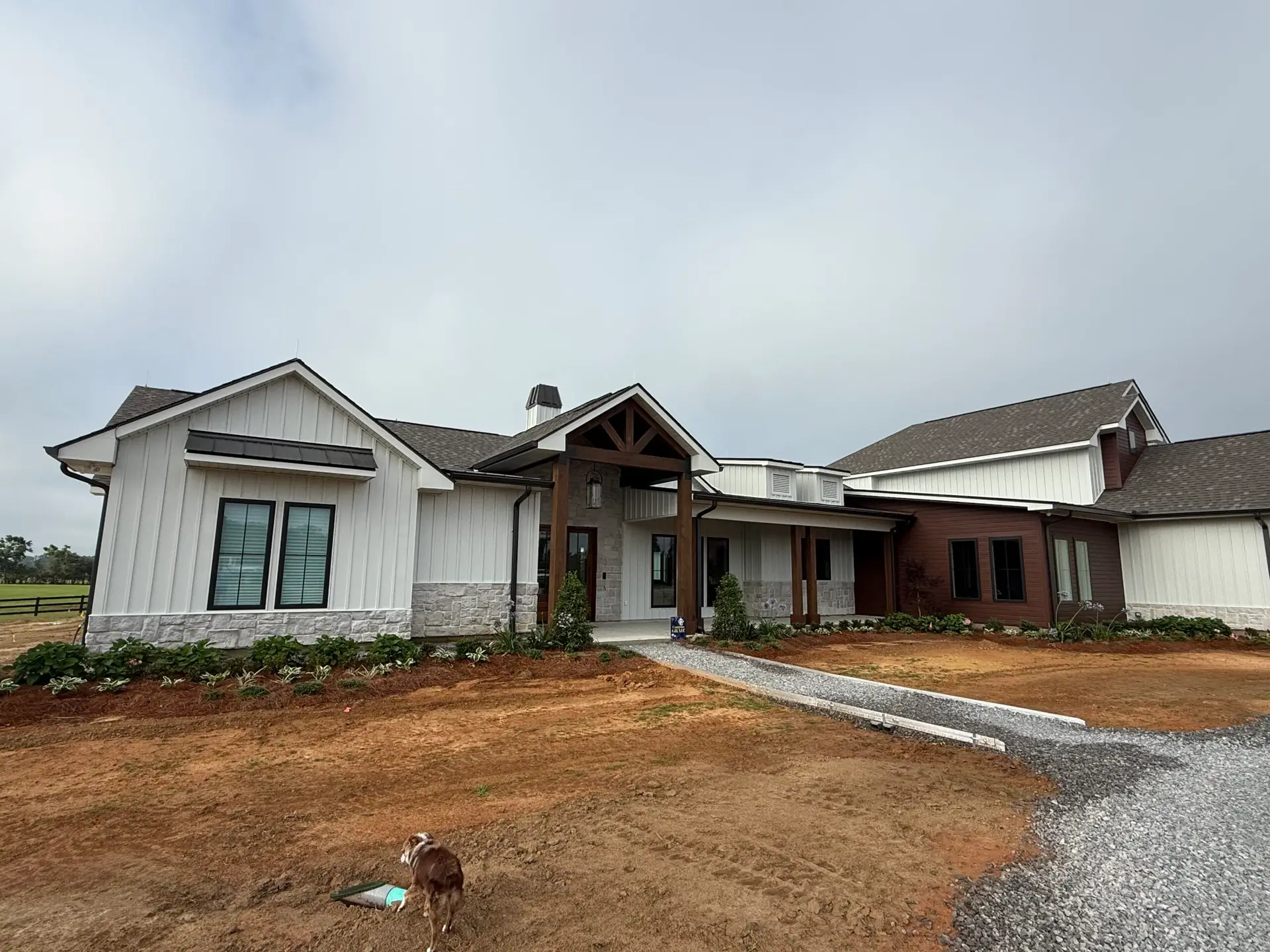
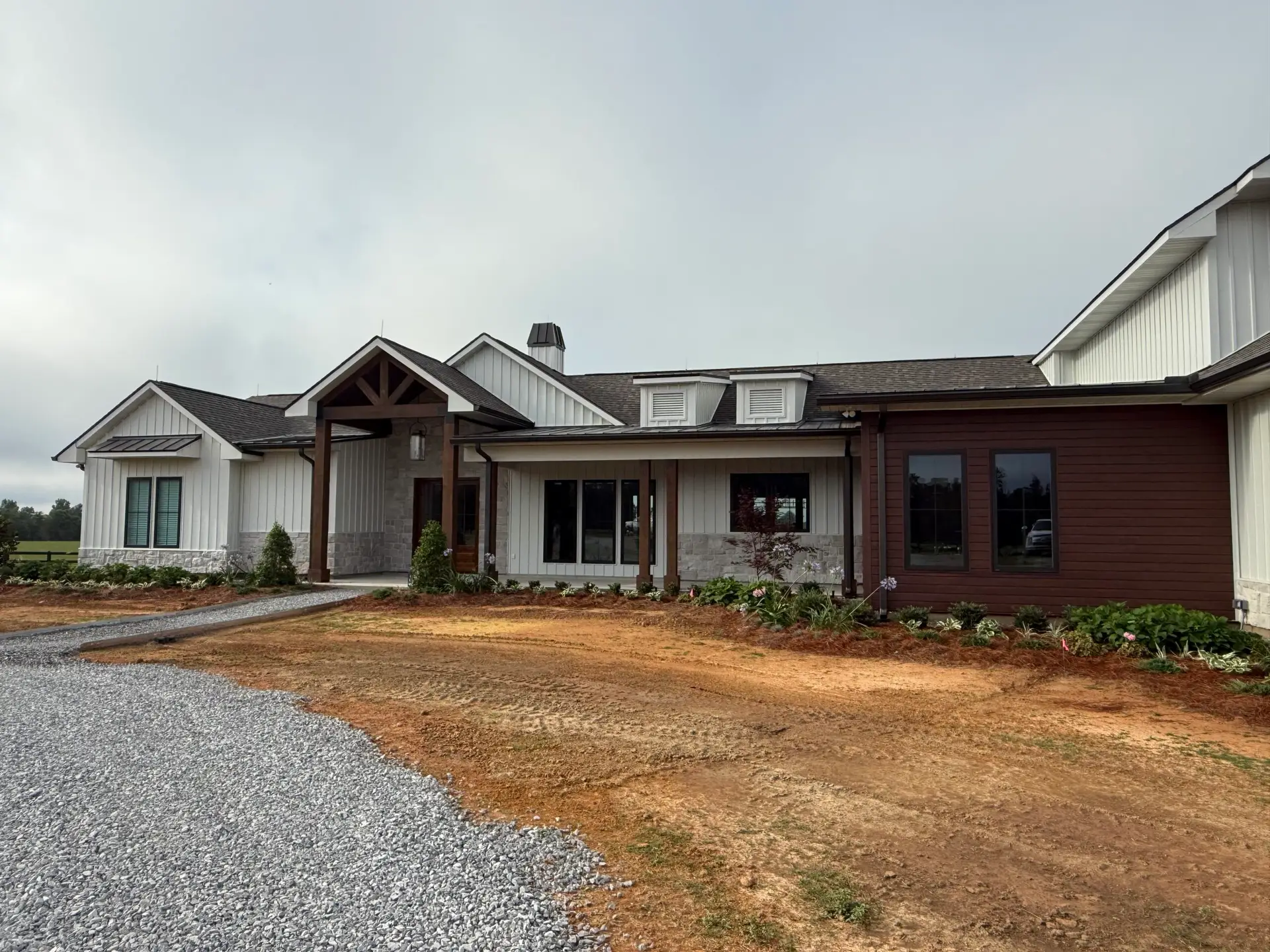
The building envelope centers on Textured Alamo White Metal Batten panels in 26-gauge steel. These panels create a tall, clean vertical rhythm that echoes traditional board-and-batten siding while providing the rigidity and impact resistance needed for high-traffic, high-visibility commercial use. The textured finish helps diffuse Louisiana’s bright Southern light, so the facade reads as a refined matte white rather than a high-glare surface—ideal for professional, agricultural, or mixed-use rural buildings.
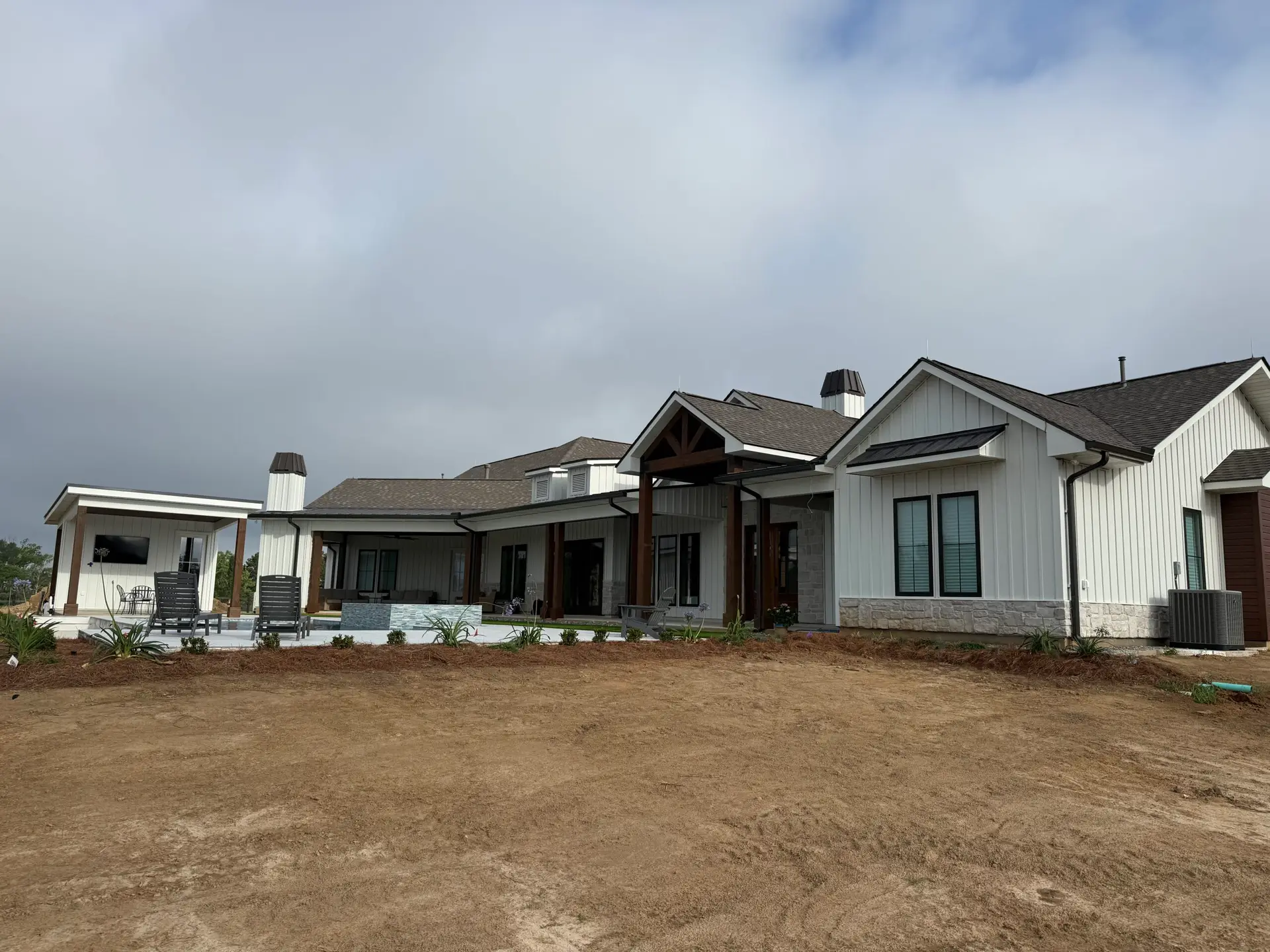
Along the base of the structure, a light stone wainscot ties into the white panels and dark window frames to create a crisp, balanced elevation. Deep overhangs and multiple gables frame the facade, giving the building a strong street presence whether it is approached from the driveway, gravel lot, or surrounding pasture.
Woodgrain metal accents for warmth and contrast
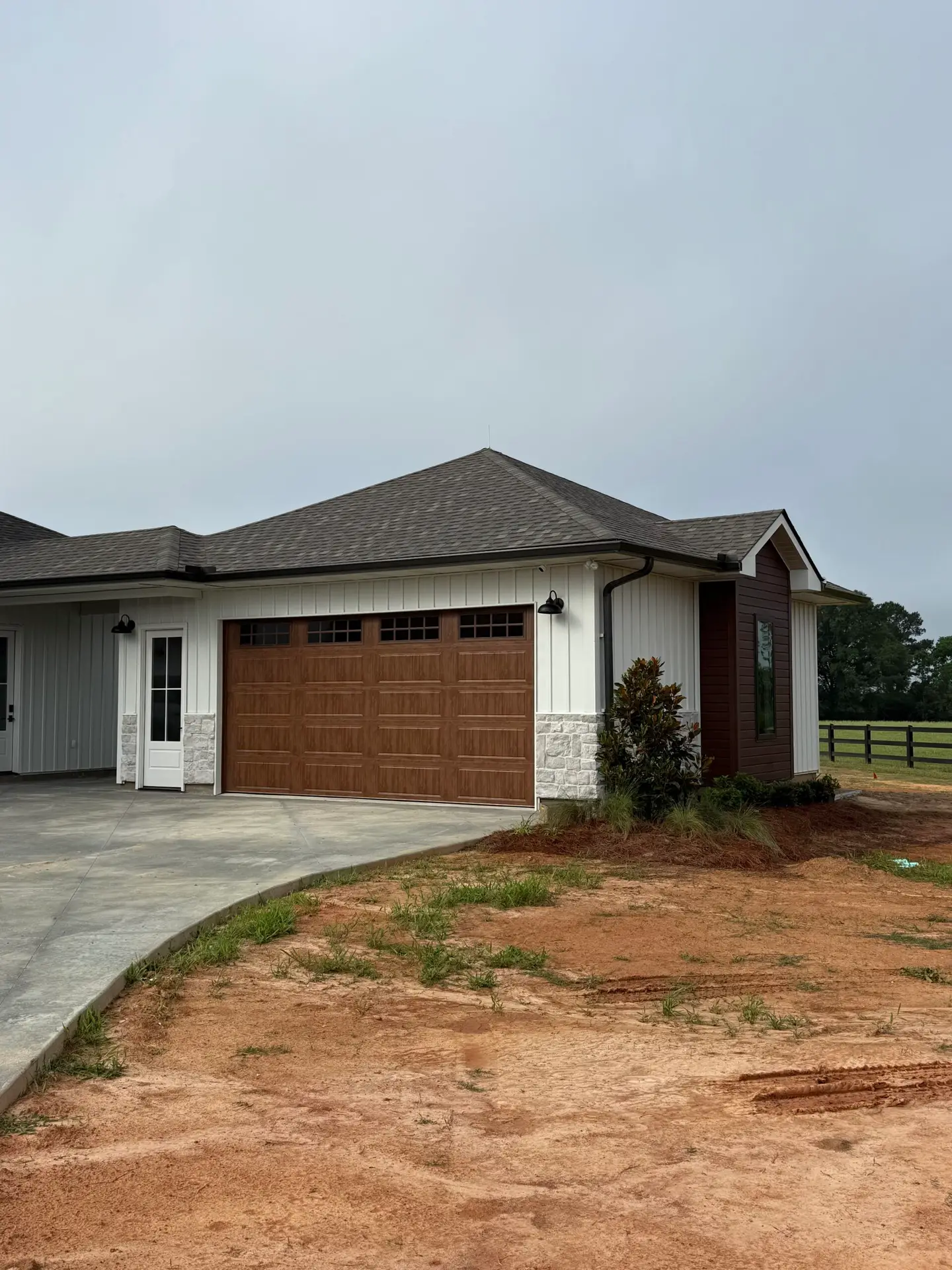
To keep the design from feeling too stark, the project introduces warmth and contrast with Metal Axis woodgrain siding in a rich Redwood finish. This siding is used strategically on key volumes—such as the wing with dark-framed windows and the garage mass—to break up the long runs of white panel and visually anchor the structure. The woodgrain steel works alongside exposed timber posts and beams at the main entry, as well as a stained wood-look garage door, to reinforce a high-end modern farmhouse aesthetic.
Because the woodgrain is steel, not natural lumber, the owner avoids the ongoing staining, repainting, and moisture‑management concerns that typically come with real wood in Louisiana’s hot, humid climate. For rural builders and architects, this offers a practical path to high-end design without committing clients to heavy maintenance cycles.
Coordinated soffit for performance and visual continuity
The envelope is finished with Metal Soffit in both perforated and solid profiles, all in the same Textured Alamo White as the primary wall panels. This creates a continuous, matching canopy line across porches, gables, and rear outdoor living areas. Perforated soffit is installed where continuous eave ventilation is needed to help manage moisture and attic heat, while solid soffit maintains a clean, uninterrupted look at entries and accent areas.
This coordinated soffit strategy is especially beneficial on complex rooflines like this project, where multiple gables, dormers, and deep covered outdoor rooms can quickly become visually cluttered. Matching color and texture across every horizontal and vertical surface keeps the design cohesive and simplifies both detailing and installation for the contractor.
Why this system works for rural Gulf Coast projects
For builders and design professionals working in the rural Gulf Coast, this Bogalusa project highlights several key advantages of a unified 26-gauge steel system:
- Durable exterior cladding that stands up to frequent storms, windborne debris, and everyday impacts
- Low‑maintenance finishes that resist fading, chalking, and the ongoing repainting demands of traditional materials
- Design flexibility, with the ability to mix light field panels, rich woodgrain accents, and complementary stone or masonry
- A consistent color and texture palette across walls, soffit, and trim that streamlines specification and installation
Whether the project is an agricultural headquarters, a rural office, or a specialty commercial facility, the combination of Textured Alamo White Metal Batten, Redwood woodgrain accents, and coordinated steel soffit demonstrates how metal can move beyond purely utilitarian uses and into the realm of high‑end rural design.